Global Design Alliance Uses AI to Boost Creativity
Global Design Alliance Embraces AI for Enhanced Creativity

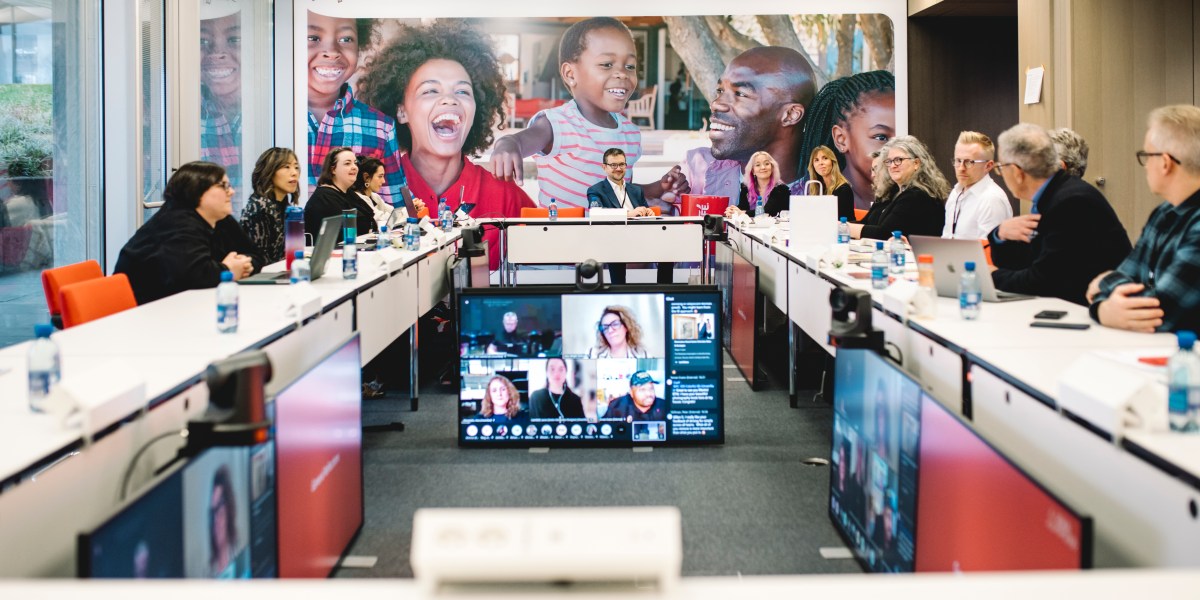
Design for Good, established in 2022, unites leading designers worldwide to advance the United Nations Sustainable Development Goals (SDGs). Courtesy of Design for Good
The creative sector often views artificial intelligence with apprehension, fearing it might diminish human innovation, impair critical thinking abilities, and jeopardize employment opportunities.
Nevertheless, a growing number of designers are beginning to embrace AI integration into their workflows, according to Cecilia Brenner, managing director of the global design charity Design for Good.
During a December 18 interview with Fortune, Brenner described AI as a valuable instrument that minimizes obstacles, enabling designers to channel their efforts more deeply into empathy and creative expression. She stressed that technology ought to support human endeavors rather than dominate them.
Launched in 2022, Design for Good now boasts a network exceeding 2,000 designers spanning 30 countries. Participants hail from prominent corporations such as PepsiCo, Nestle, and Microsoft.
Brenner initially participated as a corporate designer from Philips and ascended to the role of chief executive in 2024.
Under her leadership, she has prioritized integrating AI-powered design tools for the alliance’s members. Throughout 2025, she welcomed two AI startups from Silicon Valley—Miro and OpenStudio—into the fold.
These firms contribute specialized technology knowledge and collaborative platforms enhanced with AI capabilities, Brenner explained. She anticipates they will streamline cross-border and cross-time-zone teamwork among designers. Their collaboration tools facilitate rapid prototyping and the swift generation of diverse concepts.
By Designers, for Designers
OpenStudio was co-founded in 2023 by Koraldo Kajanaku and his sister Agi Kajanaku.
The concept emerged in 2022 when Koraldo served as senior design lead at U.S. firm IDEO, while Agi was finalizing her PhD in AI and computer graphics at Harvard University. During her studies, Agi experimented with generative AI, developing a tailored model for designers that her brother tested.
Testing it on IDEO projects, Koraldo achieved speeds 100 to 1,000 times faster for tasks previously done in Adobe Photoshop and Illustrator. This revelation prompted him to recognize its potential, as he shared in a December 19 Fortune interview.
The siblings then developed the initial version of OpenStudio during a family holiday gathering.
This platform empowers designers to produce instant renders, assemble moodboards rapidly, and bring concepts to life via AI prompts. It integrates OpenAI’s ChatGPT natively for sparking ideas, brainstorming sessions, and receiving feedback, according to the company’s website.
Users have the flexibility to alternate between various AI models, such as those from Gemini or bespoke creations, Koraldo noted.
Addressing concerns that AI undermines human creativity, Koraldo asserted that one can remain highly skilled and innovative with AI—it merely accelerates the execution phase.
Design truly flourishes at the nexus of technology and creativity, he observed. Human creativity holds inherent value that will endure.
Optimistically, Koraldo predicts AI will democratize design, leading to billions of new designers within the next five to ten years. Advanced technologies will enable broader participation, seamlessly transforming mental concepts into production-ready outputs.
AI for Good
The addition of these AI-focused members strengthens the alliance’s readiness for future challenges, Brenner affirmed.
Every two years, Design for Good selects a fresh SDG to address. They targeted clean water and sanitation (SDG 6) in 2022 and quality education (SDG 4) in 2024.
For 2026, priorities shift to good health and well-being (SDG 3) alongside climate action (SDG 13).
Expanding the network with new members fosters a responsible approach, ensuring creations benefit people and the planet without causing harm, Brenner emphasized.
Particularly for health and environmental design initiatives, AI proves invaluable.
AI enables forecasting of health or environmental impacts prior to deployment, Brenner explained. It detects potential repercussions, simulates large-scale implementations, and verifies that solutions remain harmless to humans and ecosystems.